Tignanello is one of those wines whose reputation precedes it. It’s not always easy to find and it doesn’t come cheap, but it tends to leave an impression. Or at least it did for me. I suspect I’m not the only person who could recall their first taste of it.
To understand what makes the wine quite so memorable, it’s worth taking a closer look at what Tignanello is and where it comes from.
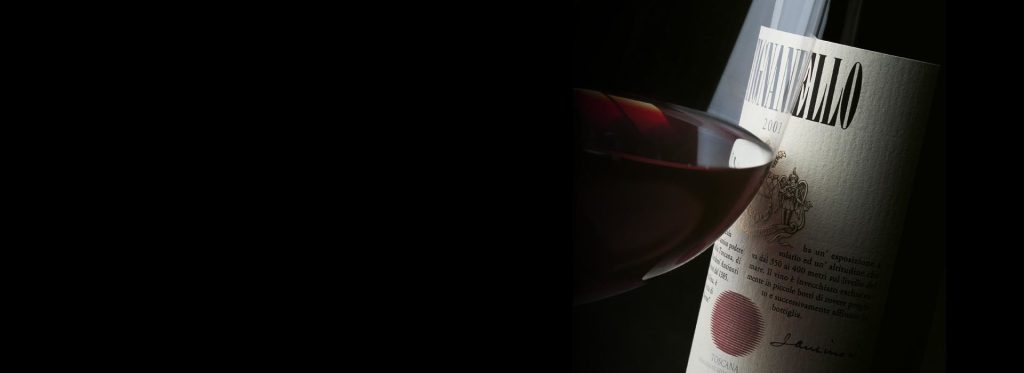
Tignanello was one of the first Super Tuscans. It’s often mentioned in the same breath as Sassicaia and Ornellaia, along with the various other high-end wines from Tuscany that make up this unofficial category. Super Tuscans are wines that are, or at least were once, considered to break with local rules and traditions – notably relating to grape varieties and ageing vessels. The first was Sassicaia, whose debut 1968 vintage set the scene for what was to come. Tignanello was hot on its heels.
You could consider Sassicaia and Tignanello two sides of the same coin: the former comes from the coastal estate of Tenuta San Guido in Bolgheri, the latter from the inland hills of Chianti Classico. Each introduced a bold new approach to making wine that would in turn influence the producers around them. There’s a family connection, too, in that Tignanello creator Marchese Piero Antinori and Sassicaia’s Marchese Niccoló Incisa della Rocchetta are cousins. (Marchese Lodovico Antinori, Piero’s brother, would go on to create Ornellaia.)
The first vintage of Tignanello proper was 1971. The previous year, Marchese Piero had crafted a wine much like any other Chianti Classico Riserva of the day: using white grapes Trebbiano and Malvasia and ageing in large oak botti. But in 1971, Antinori and his oenologist Giacomo Tachis opted instead to age the wine in the sort of small oak barrels you find in Bordeaux. In so doing they forfeited the right to use the Chianti Classico designation. Tignanello 1971 debuted (in 1974) as a Vino da Tavola, a humble table wine. With the 1975 vintage, they did away with the white-grape component entirely. There was no going back.
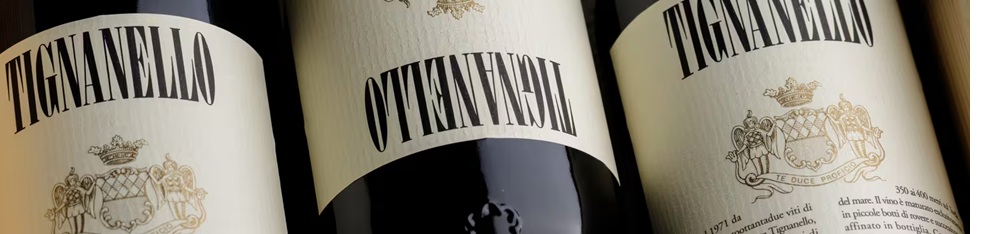
By the late 1970s and into the 1980s, there was a veritable movement underway. Tignanello’s sibling wine Solaia was introduced in 1978, initially a blend of Cabernet Sauvignon and Cabernet Franc with no Sangiovese in sight. (Notably, the two wines come from the same estate, Tenuta Tignanello.)
Considering the literal nobility behind most of these wines, it’s hard to see this as some kind of punk rock-like counterculture. But it did bring about significant stylistic change, offering both collectors and winemakers another way of approaching Tuscan wine.
As often happens with such things – Bordeaux’s later garagiste movement, for one – these outliers and iconoclasts have long since re-entered the mainstream. Regulations, norms and expectations have shifted and adapted accordingly. The Super Tuscans are today as much a part of the firmament of fine Italian wine as their rule-abiding colleagues in Chianti Classico, Montalcino, Montepulciano and beyond.
None more so than Tignanello itself. It is still produced from the same hillside that yielded that first, mould-breaking vintage. Today, the 77 hectares of vines here are planted mostly to Sangiovese, with some French-accented trespassers in the form of Cabernet Sauvignon and Cabernet Franc. The vineyard is split into more than 40 individual plots, with each harvested and vinified separately. The lots are then aged in small barrels – mostly new and mostly French – before being blended and spending the majority of their 13-month maturation as a cohesive whole. And then, it’s out into the world.